
Google Ads: A Complete Guide to PPC Advertising for Businesses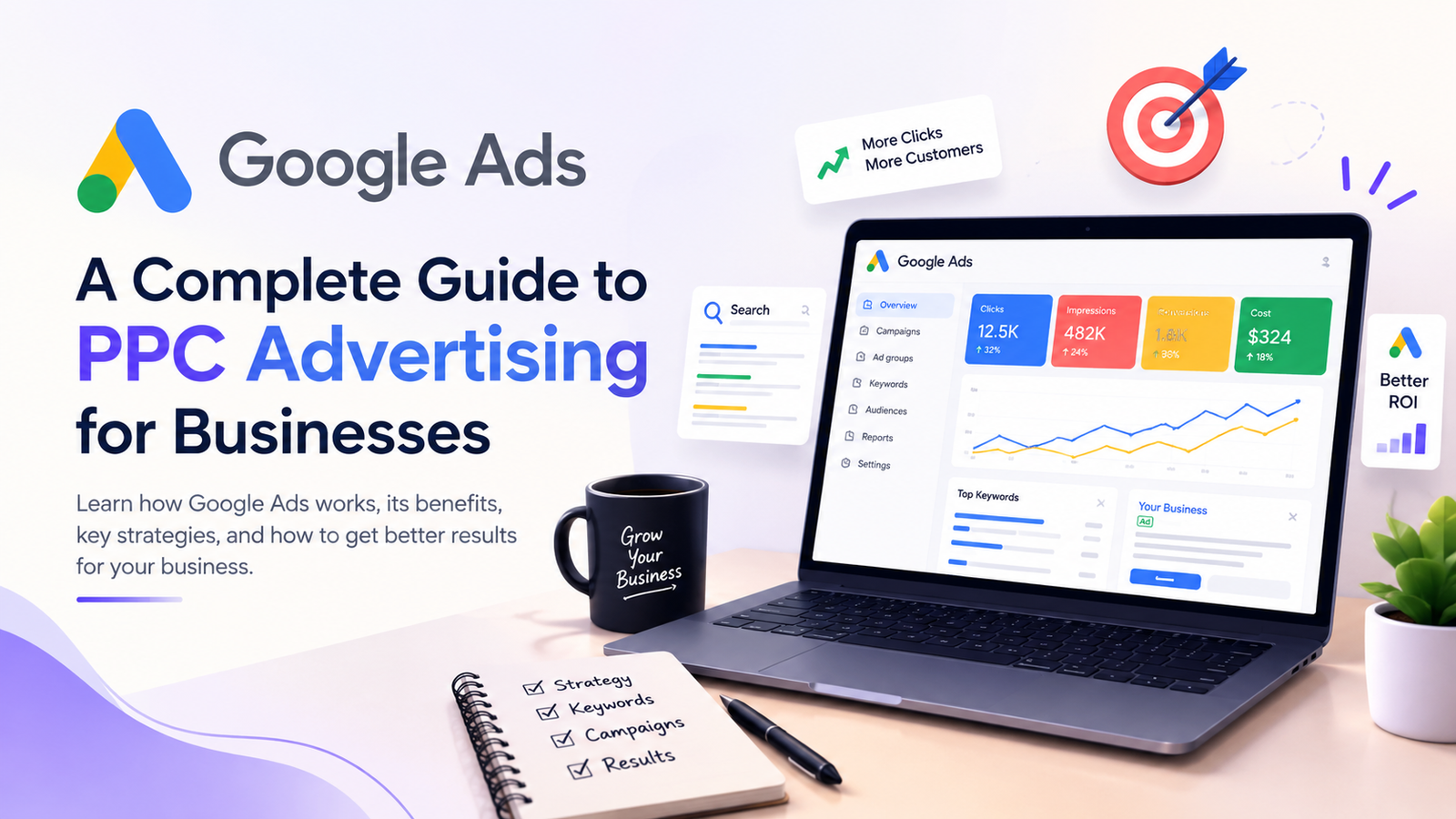
Introduction
In today’s competitive digital world, businesses need more than just a website to attract customers. They need effective online advertising strategies that can reach the right audience at the right time. One of the most powerful platforms for achieving this is Google Ads.
Google Ads is an online advertising platform that allows businesses to display advertisements across Google’s search results, websites, YouTube, apps, and other digital platforms. Unlike traditional advertising methods, Google Ads allows businesses to target specific audiences, control their advertising budgets, and measure campaign performance.
Pay-Per-Click (PPC) advertising has become an important part of digital marketing because businesses can reach potential customers who are actively searching for their products or services. When managed correctly, Google Ads can increase website traffic, generate leads, improve brand visibility, and drive sales.
This complete guide explains what Google Ads is, how PPC advertising works, the different types of campaigns, important strategies, budgeting, common mistakes, and best practices businesses can use to achieve better results.
What Is Google Ads?
Google Ads is Google’s advertising platform that enables businesses to promote their products and services online. Advertisers create campaigns based on specific goals, keywords, audiences, locations, and budgets.
For example, imagine a person searches for “best digital marketing agency near me.” A business offering digital marketing services can create a Google Ads campaign targeting relevant keywords. If the campaign is competitive and meets Google’s advertising requirements, the business’s advertisement may appear when potential customers search for related terms.
The advertiser generally pays when someone interacts with the advertisement, such as clicking on a search ad. This model is commonly known as Pay-Per-Click advertising.
Google Ads gives businesses the ability to target users based on factors such as:
- Keywords
- Location
- Language
- Device
- Audience interests
- Search intent
- Demographics
- Online behavior
This level of targeting makes PPC advertising a valuable tool for businesses of different sizes.
How Does PPC Advertising Work?
PPC stands for Pay-Per-Click. In a PPC advertising model, advertisers typically pay when a user clicks on their advertisement.
However, Google Ads is not simply a system where the highest bidder automatically gets the top position. Google uses an advertising auction to determine which ads are eligible to appear and where they appear.
Several factors can influence an advertisement’s position and performance, including:
- Bid amount
- Ad relevance
- Keyword relevance
- Landing page experience
- Expected click-through rate
- Overall ad quality
This means businesses should focus not only on their advertising budget but also on creating relevant advertisements and useful landing pages.
A well-structured campaign can sometimes achieve better results without simply increasing the budget.
Types of Google Ads Campaigns
Google Ads provides different campaign types designed for different marketing objectives.
1. Search Ads
Search Ads are text-based advertisements that can appear on Google search results when users search for relevant keywords.
For example, a user searching for “digital marketing services” may see advertisements from businesses offering those services.
Search Ads are particularly useful for capturing users who already have a specific need or intent.
2. Display Ads
Display advertising allows businesses to show visual advertisements across websites, apps, and other digital properties.
Display Ads are useful for building brand awareness, reaching new audiences, and remarketing to previous website visitors.
Visual elements such as images, headlines, and descriptions can make Display Ads more attractive to potential customers.
3. Video Ads
Video advertising allows businesses to promote their products and services through video content, particularly across Google’s video advertising ecosystem.
Video Ads can be useful for:
- Brand awareness
- Product demonstrations
- Educational content
- Customer testimonials
- Remarketing campaigns
4. Shopping Ads
Shopping Ads are designed primarily for businesses selling physical products online. They can display product images, prices, store information, and other product details.
These advertisements can help users compare products before visiting an online store.
5. App Campaigns
App campaigns help businesses promote mobile applications. These campaigns can be used to encourage users to install an app or take specific actions inside it.
6. Performance Max Campaigns
Performance Max campaigns allow advertisers to access multiple Google advertising channels through a single campaign.
They can be useful for businesses that want to reach customers across different Google properties while optimizing toward specific conversion goals.
Why Google Ads Is Important for Businesses
Google Ads can provide several advantages when campaigns are planned and managed effectively.
Immediate Visibility
Organic marketing strategies can take time to produce results. Paid advertising can provide businesses with visibility much faster.
Targeted Traffic
Businesses can target people based on relevant searches, locations, audiences, and other criteria. This can help attract users who are more likely to be interested in the product or service.
Flexible Budget
Google Ads allows advertisers to set campaign budgets and adjust them according to performance.
Small businesses can start with controlled budgets and increase investment when they identify campaigns that generate good results.
Measurable Results
One of the biggest advantages of PPC marketing is measurability.
Businesses can track metrics such as:
- Impressions
- Clicks
- Click-through rate
- Cost per click
- Conversions
- Conversion rate
- Cost per conversion
- Return on advertising spend
This data helps marketers understand what is working and what needs improvement.
Keyword Research for Google Ads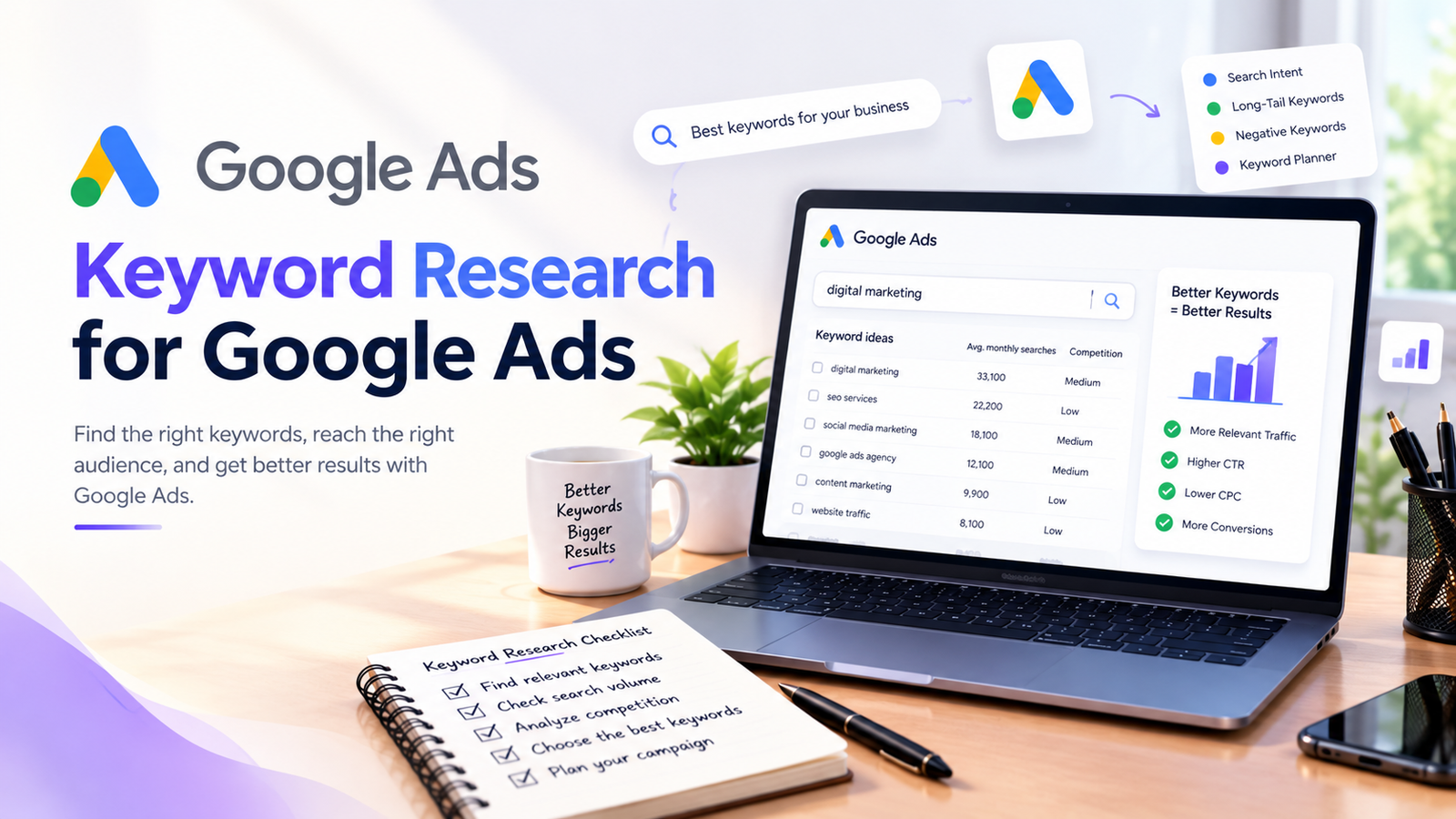
Keyword research is one of the most important steps in creating a successful Google Ads campaign.
Keywords represent the search terms people use when looking for information, products, or services.
For example, a digital marketing business might target keywords such as:
- digital marketing services
- PPC marketing agency
- Google Ads services
- social media marketing services
- online advertising agency
However, selecting keywords only because they have high search volume is not always the best strategy.
Businesses should consider:
- Search intent
- Relevance
- Competition
- Cost
- Commercial value
- Potential conversion
Understanding Search Intent
Search intent refers to the reason behind a user’s search.
For example, someone searching for “what is PPC advertising” may simply want information, while someone searching for “PPC agency for small business” may be closer to making a purchasing decision.
Understanding this difference helps advertisers create more relevant campaigns.
Creating an Effective Google Ads Campaign
A successful Google Ads campaign begins with a clear objective.
Before creating an advertisement, businesses should decide what they want to achieve.
Possible objectives include:
- Website traffic
- Lead generation
- Online sales
- Phone calls
- Brand awareness
- Product purchases
- App installations
Once the objective is clear, advertisers can select suitable keywords, audiences, advertisements, and landing pages.
Campaigns should also be organized into relevant ad groups. Each ad group should focus on a closely related set of keywords and advertisements.
This structure makes campaigns easier to manage and optimize.
Writing High-Converting Ad Copy
An advertisement needs to attract attention quickly.
Effective Google Ads copy should clearly communicate:
- What the business offers
- Why the customer should choose it
- What makes the offer valuable
- What action the user should take
Strong calls to action can encourage users to take the next step.
Examples include:
- Get Started Today
- Request a Free Consultation
- Shop Now
- Learn More
- Book a Consultation
- Get Your Quote
Advertisers should also ensure that their ad copy matches the keywords and landing page content.
The Importance of Landing Pages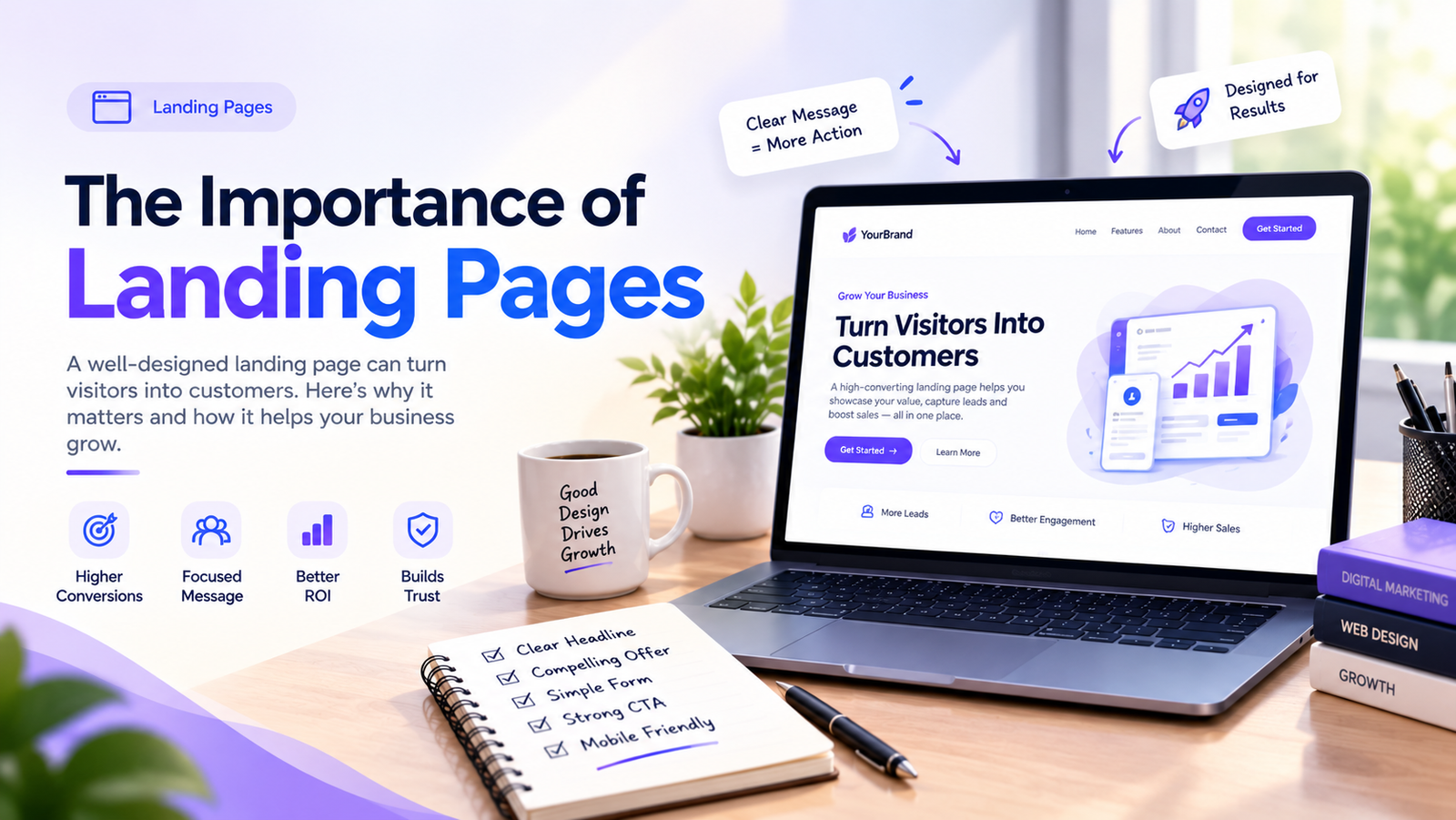
Getting a click is only one part of PPC advertising. The next challenge is converting that visitor into a lead or customer.
This is where landing pages become important.
A good landing page should:
- Load quickly
- Work well on mobile devices
- Clearly explain the offer
- Have a strong headline
- Provide relevant information
- Include a clear call to action
- Build trust
- Make it easy for visitors to take action
If an advertisement promises a specific service but sends users to an unrelated homepage, visitors may leave without converting.
The advertisement and landing page should therefore provide a consistent experience.
Google Ads Budget and Bidding
Budget management is an important part of PPC marketing.
Businesses should determine how much they are willing to spend based on their marketing goals and expected returns.
Instead of focusing only on getting the highest number of clicks, advertisers should focus on getting valuable clicks and conversions.
Important financial metrics include:
Cost Per Click
CPC represents the amount paid for a click on an advertisement.
Cost Per Conversion
Cost per conversion helps businesses understand how much they are spending to generate a lead, sale, or other desired action.
Return on Ad Spend
ROAS measures the revenue generated in relation to advertising expenditure.
These metrics help businesses make better decisions about where to allocate their advertising budget.
Measuring Google Ads Performance
Launching a campaign is not the end of the process.
Successful PPC advertising requires continuous monitoring and optimization.
Some important metrics include:
Click-Through Rate
CTR measures how frequently people click an advertisement after seeing it.
A higher CTR can indicate that an advertisement is relevant and attractive to its audience.
Conversion Rate
Conversion rate measures the percentage of visitors who complete a desired action after clicking an advertisement.
Cost Per Conversion
This metric shows how much the business spends to generate a conversion.
Return on Ad Spend
ROAS helps businesses evaluate the financial effectiveness of their advertising campaigns.
By regularly analyzing these metrics, marketers can identify successful campaigns and areas that require improvement.
Common Google Ads Mistakes
Many businesses struggle with PPC advertising because of avoidable mistakes.
Targeting Too Broadly
Using extremely broad targeting can result in irrelevant clicks and wasted advertising budgets.
Ignoring Negative Keywords
Negative keywords can help prevent advertisements from appearing for irrelevant searches.
Sending All Traffic to the Homepage
A dedicated landing page can often provide a better experience than sending every visitor to a general homepage.
Not Tracking Conversions
Without conversion tracking, it becomes difficult to understand whether advertising is actually producing business results.
Focusing Only on Clicks
A campaign can generate many clicks without generating valuable customers.
The ultimate goal should be meaningful business outcomes rather than clicks alone.
Not Testing Ads
Different headlines, descriptions, offers, and calls to action can produce different results.
Regular testing can help marketers discover better-performing combinations.
Google Ads Best Practices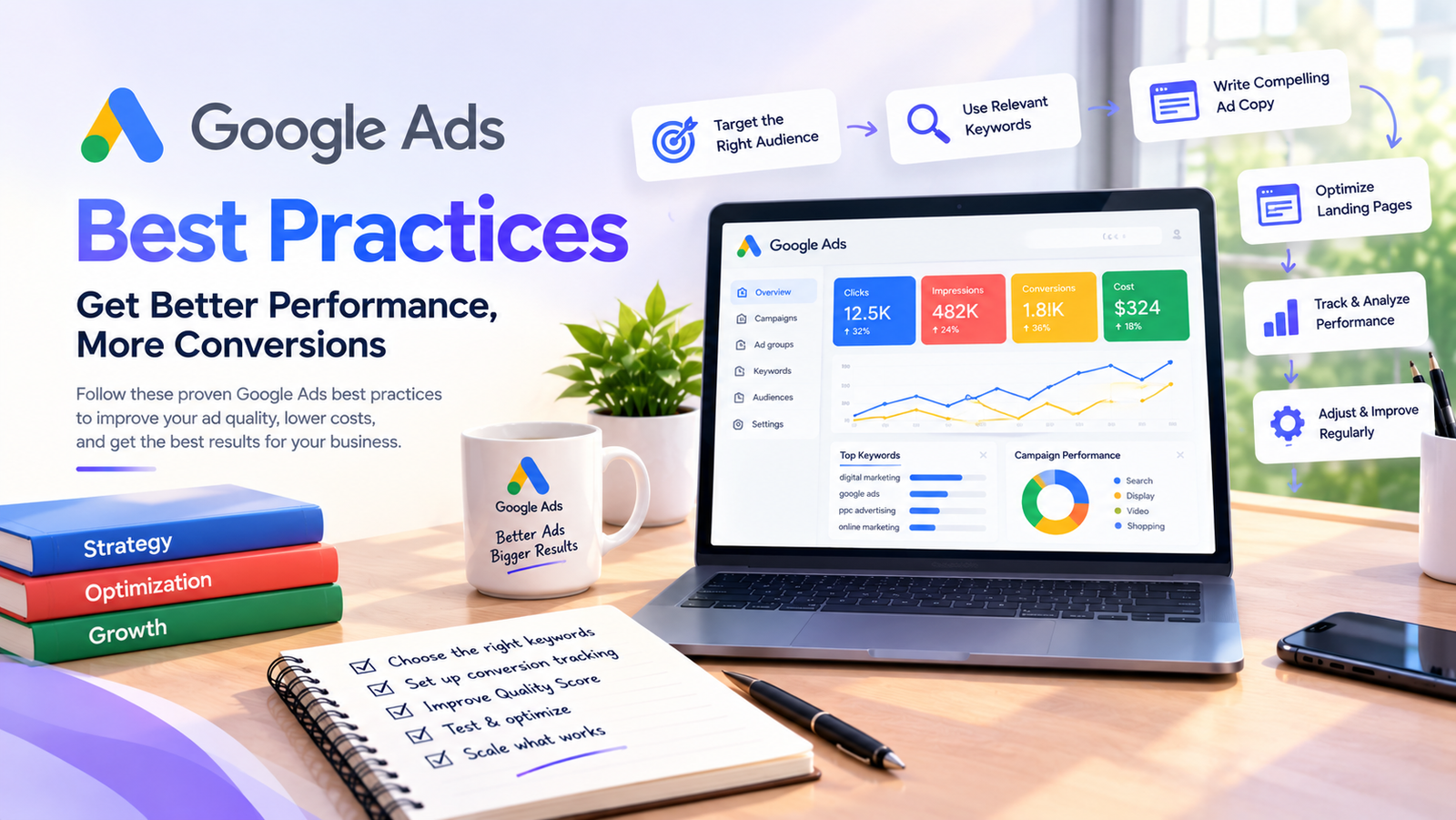
Businesses can improve their PPC campaigns by following several best practices.
First, define a clear campaign objective.
Second, conduct proper keyword research and understand search intent.
Third, organize campaigns and ad groups logically.
Fourth, create relevant and compelling advertisements.
Fifth, optimize landing pages for conversions.
Sixth, track important performance metrics.
Seventh, regularly review search terms and remove irrelevant traffic.
Finally, continuously test and optimize campaigns instead of simply launching them and leaving them unchanged.
The Future of PPC Advertising
Digital advertising continues to evolve as technology, consumer behavior, and artificial intelligence develop.
Automation and AI are increasingly being used to help advertisers analyze data, identify audiences, optimize campaigns, and improve advertising performance.
However, technology does not remove the need for good marketing strategy.
Successful PPC campaigns still require an understanding of customers, business objectives, creative communication, data analysis, and continuous optimization.
Businesses that combine technology with strong marketing fundamentals will be better positioned to compete in an increasingly digital marketplace.
Conclusion
Google Ads is one of the most powerful tools available for businesses that want to reach potential customers online. Through PPC advertising, businesses can target relevant audiences, control their budgets, measure campaign performance, and generate traffic, leads, and sales.
However, successful Google Ads campaigns require more than simply creating an advertisement and choosing a budget. Effective keyword research, relevant ad copy, strong landing pages, accurate conversion tracking, and continuous optimization are all essential.
Whether a business is a small local company, an online store, or a growing brand, Google Ads can become an important part of a broader digital marketing strategy.
The key to successful PPC advertising is to focus on the right audience, deliver the right message, measure the results, and continuously improve the campaign based on real performance data.