
Generative Engine Optimization (GEO): How to Get Your Brand Recommended by AI Search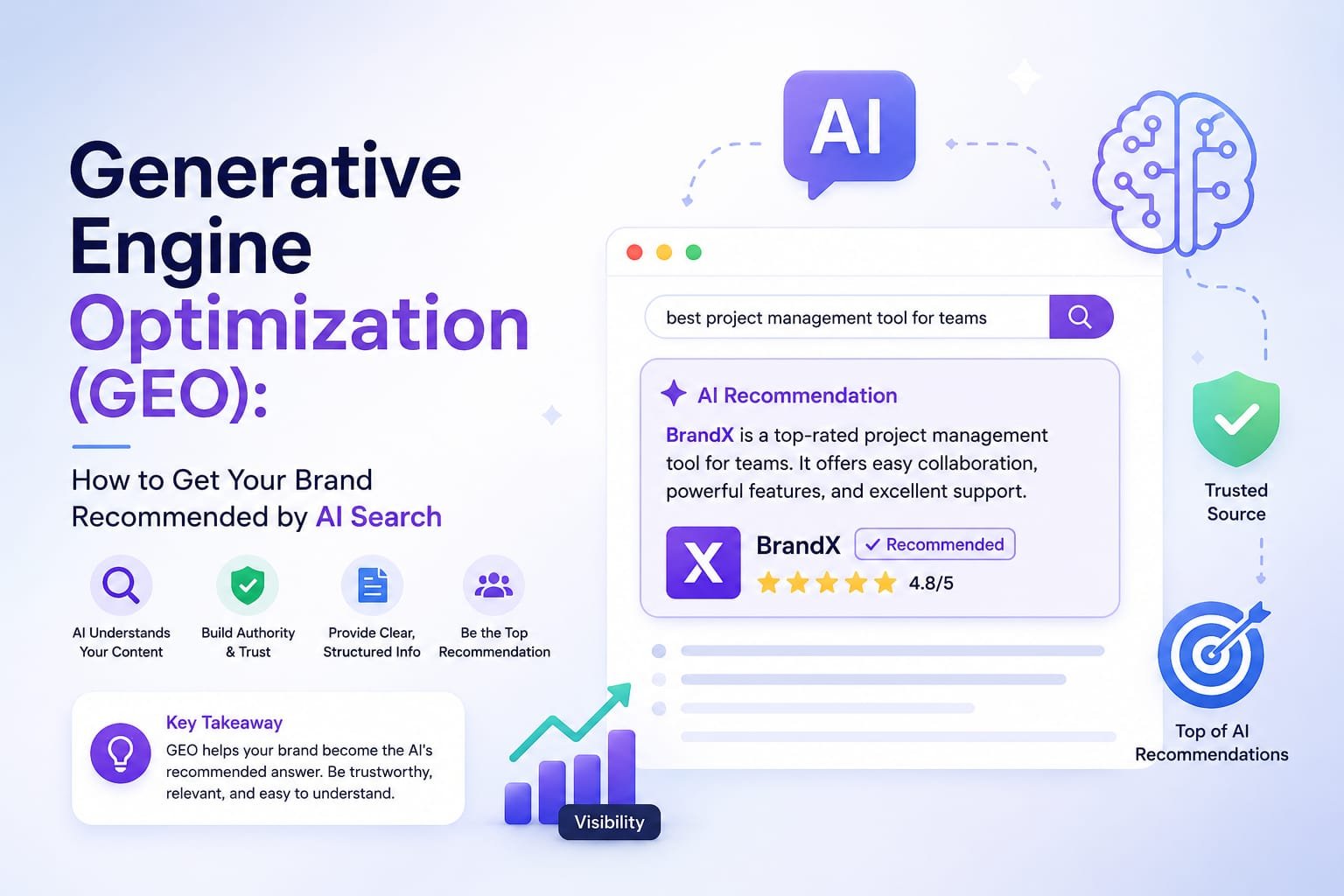
The way people search for information online is changing rapidly.
For years, businesses focused primarily on traditional search engines such as Google to attract customers. Marketers invested in keywords, backlinks, technical optimization, and content strategies to improve their search visibility.
Today, another major shift is taking place.
People are increasingly using AI-powered search experiences to ask questions, compare products, discover businesses, research services, and find recommendations. Instead of receiving a simple list of links, users can receive conversational answers that summarize information from multiple sources.
This change has created a new area of digital marketing known as Generative Engine Optimization (GEO).
GEO focuses on improving a brand’s visibility across AI-powered search and answer experiences. The goal is not simply to rank a webpage for a keyword, but to make a business, website, product, or piece of content more likely to be understood, referenced, cited, or mentioned when AI systems answer relevant questions.
AI search is already capable of providing answers with links to supporting web sources. For example, ChatGPT Search can search the web and provide citations and links to relevant sources. citeturn0search1turn0search4
As search continues to become more conversational, businesses need to understand how GEO works and how it can complement traditional digital marketing strategies.
What Is Generative Engine Optimization?
Generative Engine Optimization (GEO) is the practice of creating and improving online content so that it can be better understood and potentially surfaced, referenced, or cited by AI-powered search and answer engines.
Traditional SEO mainly focuses on improving visibility in search engine results pages.
GEO focuses on visibility within AI-generated answers.
When someone asks an AI search system:
“What are the best digital marketing strategies for a small business?”
The system may generate a complete answer instead of simply showing ten blue links.
For a business, appearing within that answer—or being referenced as a useful source—can create a new type of digital visibility.
GEO therefore focuses on areas such as:
- Helpful and original content
- Brand authority
- Clear information
- Relevant entities and topics
- Strong website structure
- Credible sources
- Brand mentions
- Natural language
- Question-based content
- Consistent online information
It is important to understand that GEO is not a guaranteed ranking technique. AI search systems use multiple signals, and there is no reliable method to guarantee that a particular brand will appear in an AI-generated answer. citeturn0search2
GEO vs SEO: What’s the Difference?
SEO and GEO are closely related, but they have different goals.
Traditional SEO
SEO focuses on helping webpages appear prominently in traditional search results.
Common SEO activities include:
- Keyword research
- On-page optimization
- Technical SEO
- Link building
- Page speed optimization
- Metadata optimization
- Search intent analysis
Generative Engine Optimization
GEO focuses more on helping AI systems understand a brand and its content so that the information can potentially be used in AI-generated answers.
GEO can involve:
- Answer-focused content
- Clear explanations
- Strong topical authority
- Brand mentions
- Structured information
- Reliable sources
- Entity relationships
- Conversational queries
- AI-search visibility
The two strategies should not be treated as competitors.
A strong digital marketing strategy can combine SEO and GEO.
A website that is technically accessible, useful, trustworthy, well-structured, and authoritative can potentially benefit from both traditional search and AI-powered discovery.
?Why Is GEO Important for Businesses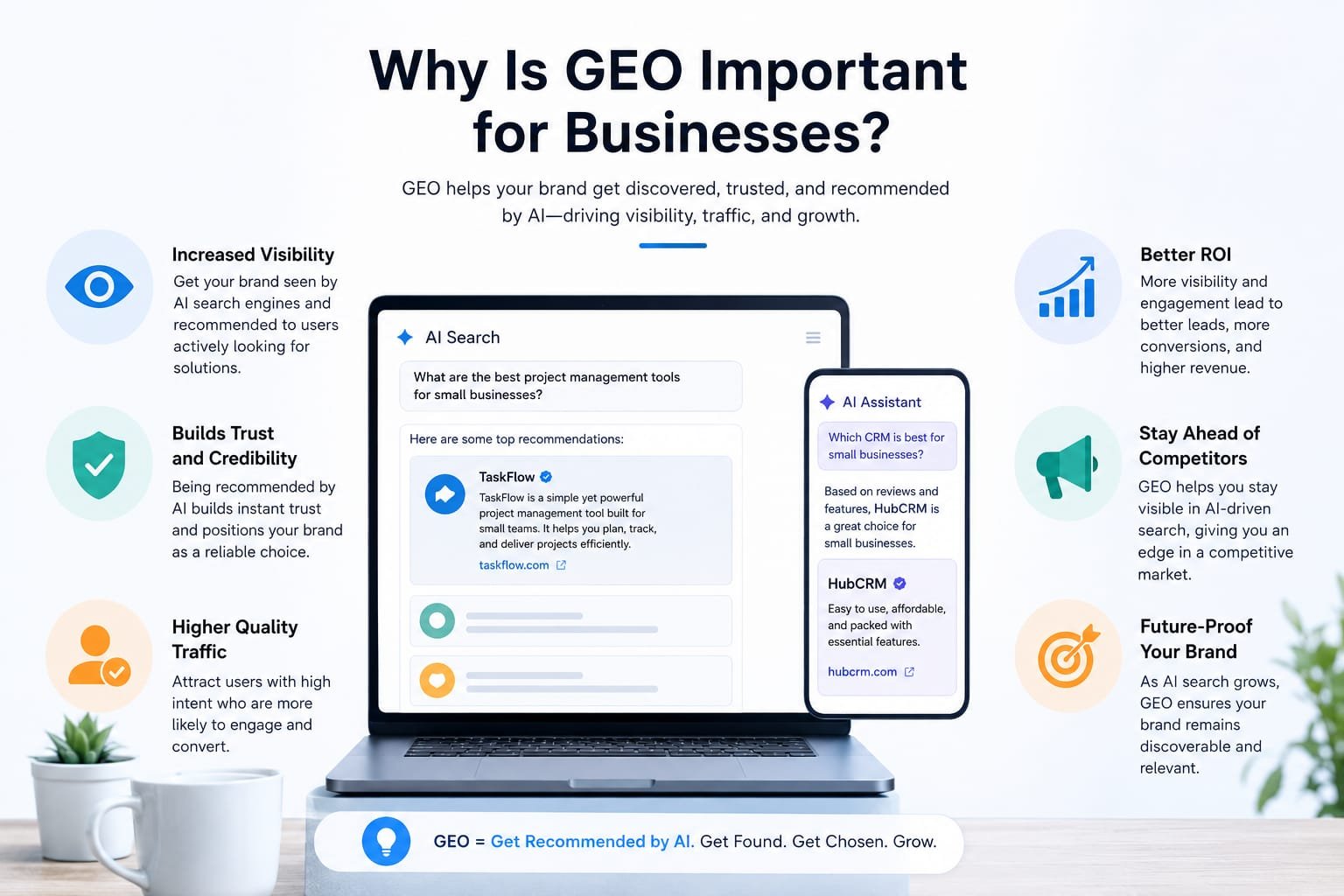
Search behavior is becoming more conversational.
Instead of searching:
“digital marketing agency Kerala”
a user might ask:
“What should a small business do to get more customers online?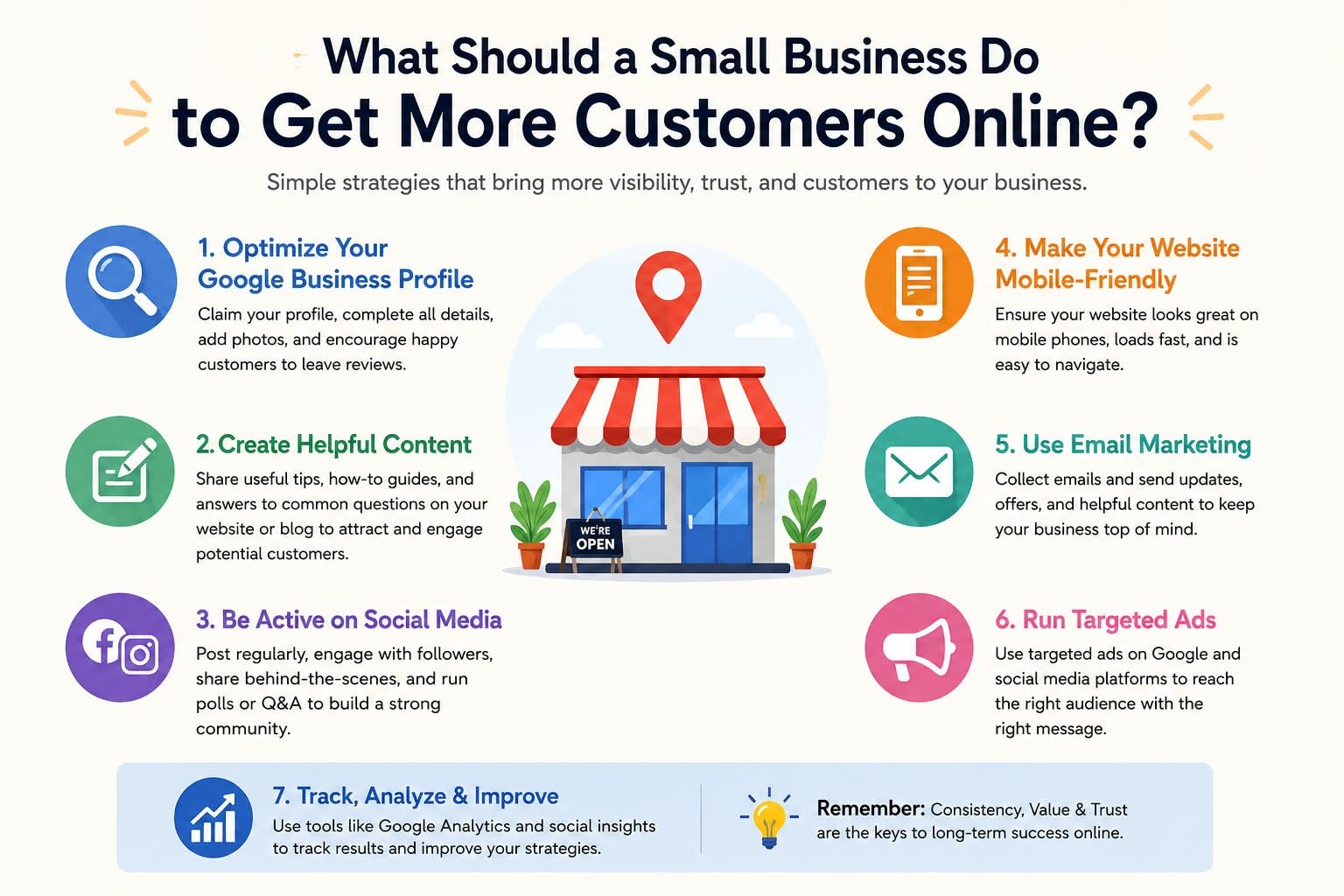
AI-powered systems can interpret the meaning behind longer and more natural questions.
This creates new opportunities for businesses that publish useful, detailed, and trustworthy information.
1. Changing Search Behavior
Users increasingly expect direct answers rather than spending time opening multiple websites.
AI search experiences are designed to summarize information and provide relevant sources. ChatGPT Search, for example, can search the web and provide source links within responses. citeturn0search1
2. Brand Discovery
A customer may discover a company through an AI-generated recommendation before visiting its website.
This makes brand visibility across AI search an emerging consideration for digital marketers.
3. Competitive Advantage
Because GEO is still developing, businesses that start experimenting with AI-search-friendly content can learn what works before the space becomes more competitive.
4. Building Authority
GEO encourages businesses to create genuinely useful information.
When a company consistently publishes valuable content about its area of expertise, it can strengthen its overall digital presence.
How AI Search Understands Your Brand
One of the most important parts of GEO is helping AI systems understand who your brand is, what you do, and what topics you are associated with.
For example, suppose a company provides:
- SEO services
- Social media management
- PPC advertising
- Content marketing
Its website should communicate these services clearly.
The same information should ideally be consistent across relevant online profiles and reputable third-party sources.
Important information can include:
- Brand name
- Services
- Products
- Industry
- Location
- Expertise
- Contact information
- Customer reviews
- Business descriptions
The clearer the digital identity of a business, the easier it can be for systems to interpret the brand’s relevance.
Create Content That Answers Real Questions
One of the strongest GEO strategies is creating content around questions people actually ask.
Instead of creating an article simply because a keyword has search volume, think about the questions customers have.
For example:
Question:
“How much does digital marketing cost for a small business?”
Instead of writing a short page containing the keyword “digital marketing cost,” create a complete resource explaining:
- What digital marketing includes
- Different pricing models
- Factors affecting cost
- Common services
- Advertising budgets
- Expected outcomes
- How businesses can choose a suitable strategy
This approach creates content that is useful for humans and easier to interpret in conversational search environments.
Focus on Helpful and Original Content
GEO should not become a strategy for producing huge amounts of low-quality AI-generated content.
The objective should be to create content that provides genuine value.
Strong content should:
- Answer the user’s question
- Provide useful examples
- Explain complex concepts clearly
- Include accurate information
- Demonstrate expertise
- Avoid unnecessary repetition
- Provide original insights
- Stay relevant to the topic
For example, instead of writing:
“Digital marketing is important because digital marketing helps businesses grow.”
A stronger explanation would describe exactly how digital marketing can help a business generate awareness, leads, conversions, and measurable results.
Quality matters more than simply increasing word count.
Build Topical Authority
Topical authority means demonstrating strong knowledge across a particular subject.
For a digital marketing website, this could involve publishing content about:
- SEO
- PPC
- Social media marketing
- Content marketing
- Email marketing
- Analytics
- Conversion optimization
- AI marketing
- GEO
Instead of publishing unrelated articles, businesses can build connected content around their main expertise.
For example, a digital marketing portfolio could have a main guide about Performance Marketing and supporting articles about:
- PPC campaign strategy
- Conversion tracking
- Landing page optimization
- Ad creative testing
- Marketing analytics
This creates a stronger content ecosystem.
Make Your Content Easy for AI and Humans to Understand
Clear structure is important.
Long blocks of text can make information difficult to understand.
A better structure includes:
- Clear headings
- Short paragraphs
- Bullet points
- Numbered lists
- Definitions
- Examples
- FAQs
- Comparisons
- Step-by-step explanations
For example, instead of writing one long paragraph about Google Ads, create separate sections such as:
What Is Google Ads?
How Does Google Ads Work?
How Much Does Google Ads Cost?
How Can Businesses Improve PPC Results?
This structure makes the content easier for readers to navigate and easier for systems to interpret.
Use Natural Language and Conversational Queries
Traditional keyword optimization often focuses heavily on short phrases.
GEO encourages marketers to think about complete questions and natural conversations.
For example:
Traditional keyword:
“PPC advertising”
Conversational query:
“How can PPC advertising help a small business get more customers?”
A strong article can address both.
Creating content around natural questions can help businesses cover the different ways users may search for information.
Strengthen Your Brand’s Digital Authority
Brand authority is an important part of modern digital marketing.
Businesses should aim to maintain consistent and trustworthy information across their online presence.
This may include:
- Official website
- Business profiles
- Professional directories
- Industry publications
- Social media profiles
- Reviews
- Interviews
- Relevant publications
- Customer testimonials
The objective is not to create artificial mentions.
Instead, businesses should build genuine digital credibility through useful work, strong customer experiences, quality content, and legitimate online recognition.
The Importance of Website Accessibility
Creating great content is not enough if search systems cannot access it.
For example, OpenAI’s current guidance says websites that want to appear in ChatGPT Search should allow OAI-SearchBot to crawl the website, while ranking or placement itself is not guaranteed. citeturn0search0turn0search2
This means technical website accessibility remains important in the AI-search era.
Businesses should pay attention to:
- Crawlability
- Mobile responsiveness
- Page speed
- Internal linking
- Clear navigation
- Proper indexing
- Accessible content
- Website security
GEO does not eliminate the technical foundations of a good website.
Structured Data and Entity Optimization
Structured data can help search systems understand what different elements on a webpage represent.
For example, structured information can help identify:
- Organization
- Product
- Person
- Article
- Local business
- Event
- Review
Entity optimization is also becoming increasingly relevant.
An entity is a clearly identifiable person, organization, product, place, or concept.
For example:
AJLAN EZY → Digital Marketing → SEO → Social Media Marketing → Performance Marketing
Clearly connecting a brand with its services and expertise can help establish a more understandable digital identity.
Optimize for Citations and Sources
AI search systems can provide links to sources used to support their answers.
For businesses and publishers, being referenced as a useful source can create valuable visibility.
OpenAI’s ChatGPT Search documentation explains that search responses can include citations and links to sources, while inclusion and placement are not guaranteed. citeturn0search1turn0search2
To improve the quality of your content:
- Support important claims with reliable information
- Keep facts accurate
- Update outdated information
- Provide original explanations
- Use trustworthy references when appropriate
- Avoid misleading claims
The goal should be to become a useful source, not simply to manipulate an AI system.
GEO for ChatGPT and AI Search
AI search platforms work differently from traditional search engines.
A user can ask a conversational question and receive an answer synthesized from web information.
For example:
“What are the best digital marketing strategies for a local business in 2026?”
An AI search system may analyze multiple sources before producing an answer.
For businesses, this means content should cover topics comprehensively rather than targeting only one exact keyword.
A strong article can answer the main question while also addressing related questions.
This creates a deeper and more useful resource.
Common GEO Mistakes
As GEO becomes more popular, marketers may make several mistakes.
1. Keyword Stuffing
Repeating the same keyword excessively does not automatically improve AI visibility.
2. Creating Low-Quality AI Content
Using AI to generate large amounts of repetitive content can reduce quality.
AI should be used as a tool—not as a replacement for expertise and original thinking.
3. Making Unsupported Claims
False statistics and exaggerated claims can damage credibility.
4. Ignoring Humans
GEO should ultimately improve the experience for people.
Content should be written for users first.
5. Expecting Guaranteed AI Rankings
No legitimate strategy can guarantee that a brand will appear in every AI-generated answer.
AI search systems use multiple factors, and results can vary.
6. Ignoring Website Technical Health
Poor accessibility, broken pages, slow performance, and crawl restrictions can limit discoverability.
How to Measure GEO Performance
GEO measurement is still developing, but businesses can monitor several useful signals.
Brand Mentions
Track how often your brand appears in relevant AI-generated answers when testing representative queries.
Referral Traffic
Monitor website traffic that comes from AI search and related referral sources where analytics can identify them.
Brand Searches
An increase in branded searches can indicate growing awareness.
Organic Visibility
Traditional search performance remains important and should continue to be monitored.
Content Engagement
Analyze:
- Page views
- Engagement
- Time spent
- Conversions
- Leads
- Returning visitors
The goal is not simply to appear in an AI answer.
The ultimate objective is to generate meaningful business results.
A Practical GEO Strategy for 2026
Businesses can start with a simple process.
Step 1: Define Your Expertise
Identify the topics your business genuinely understands.
Step 2: Research Customer Questions
Find the questions customers ask about your products or services.
Step 3: Create Comprehensive Content
Develop useful articles, guides, FAQs, and resources that answer those questions.
Step 4: Improve Website Structure
Make the website fast, mobile-friendly, accessible, and easy to navigate.
Step 5: Strengthen Brand Authority
Build legitimate mentions, reviews, partnerships, and industry recognition.
Step 6: Keep Information Consistent
Ensure your brand name, services, descriptions, and important business information are accurate across your digital presence.
Step 7: Monitor AI Search Visibility
Test relevant questions across AI search platforms and observe how your brand and competitors are represented.
Step 8: Improve Continuously
Use the results to identify content gaps and create better resources.
The Future of Generative Engine Optimization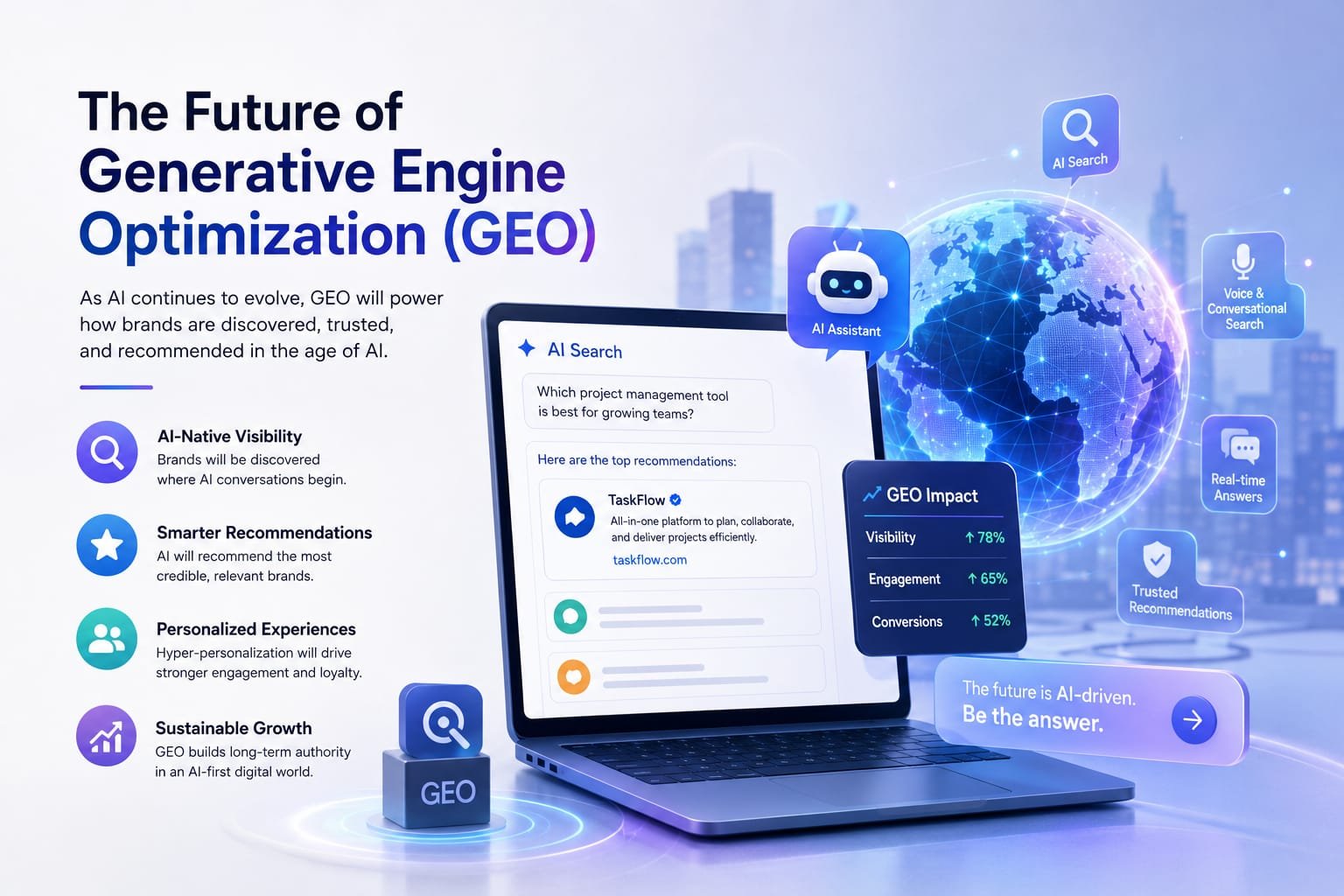
GEO is likely to become an increasingly important part of digital marketing as AI-powered search continues to evolve.
Search is moving from simple keyword matching toward more conversational experiences.
People may increasingly ask AI systems to:
- Compare products
- Recommend services
- Research companies
- Find solutions
- Summarize information
- Create buying shortlists
- Explain complex subjects
This means brands will need to think beyond traditional search rankings.
The future of search visibility will involve a combination of:
SEO + GEO + Brand Authority + Quality Content + User Experience + Data
Businesses that focus on genuinely useful information will be better positioned to adapt as search technology evolves.
Conclusion
Generative Engine Optimization represents a new direction in digital marketing.
As AI-powered search experiences become more capable of answering questions, summarizing information, and linking users to sources, businesses need to consider how their brands and content are discovered within these new environments.
GEO is not about finding a secret formula to force an AI system to recommend a brand.
It is about building a strong digital presence that AI systems can understand and users can trust.
That means creating helpful content, answering real questions, demonstrating expertise, maintaining accurate brand information, improving website accessibility, and building genuine authority.
Traditional SEO is not disappearing. Instead, the digital marketing landscape is expanding.
Businesses that combine strong SEO foundations with high-quality content, brand authority, and AI-search-focused strategies can prepare themselves for the next generation of online discovery.
The future of search is becoming more conversational, intelligent, and personalized.
For businesses, the opportunity is clear:
Don’t just optimize to be found in search results. Build a brand that is worth recommending.